Leer Madrid
Client
Ayuntamiento de Madrid
Year
2017—2023
Services
Maps
Signage
Pictograms
Credits
Lead team: Applied Wayfinding
Local team: Avanti, Paisaje Transversal,
Urban Networks, Dimas García.
Thanks to: Design for All International
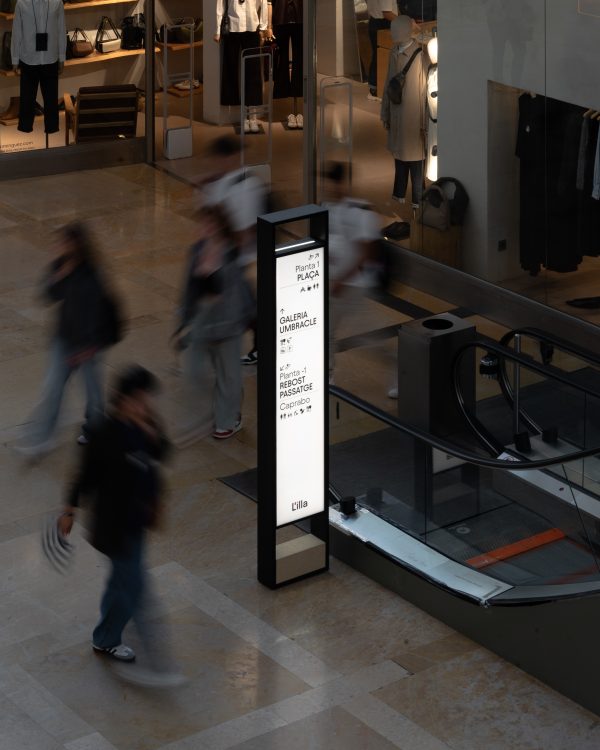
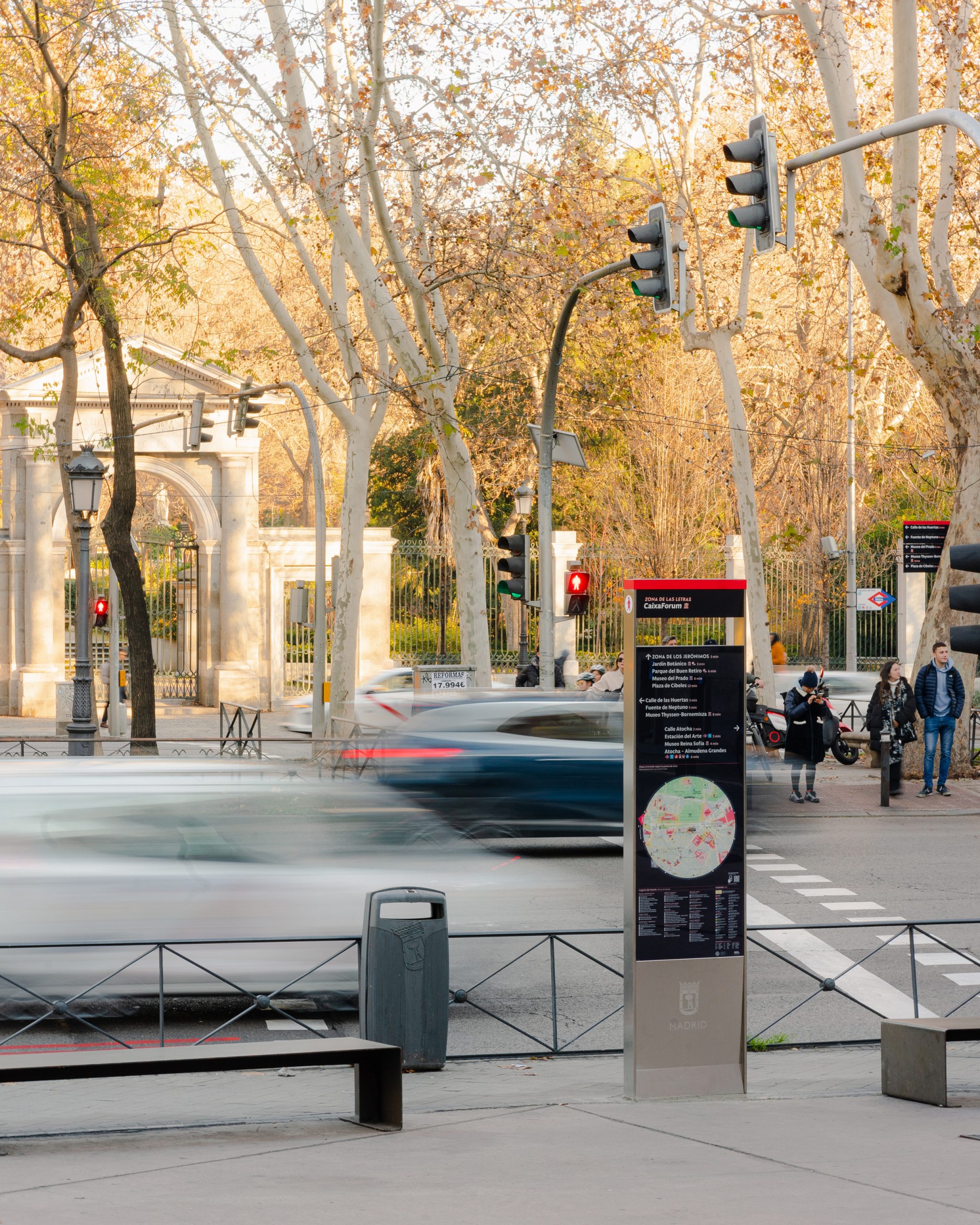
Large cities around the world are places where people from different backgrounds and walks of life constantly move and interact constantly. Lack of information, lack of legibility and disorientation can make them confusing and intimidating places. Leer Madrid is a pedestrian and universal signage system for the city of Madrid. By studying the diversity and specific needs of the population, Leer Madrid establishes a pioneering methodology in Wayfinding design, aligned with the planning of safer, healthier and more inclusive cities.


Madrid, a diverse and complex city
More than 3.2 million people live in the city of Madrid. In 2019, it received more than 10.4 million visitors. It is a diverse and stimulating city, with a flux of complex situations and constant changes that can cause disorientation and make it easy to get lost. According to the 2017 study, up to 32% of visitors and 23% of residents got lost during the week.

Disorientation and the lack of Wayfinding resources in public space conditions people’s behaviour in the city. It affects the selection and distances of routes or the number of places and shops visited. All this influences the development of the local economy and the quality of life of residents, visitors and tourists.

Leer Madrid, a universal wayfinding system
The Leer Madrid project aims to implement a unified pedestrian wayfinding system in the city that is universal, sustainable and intelligent. The purpose of a wayfinding system is to improve the legibility of the urban environment and to guide all people, in order to obtain social and economic benefits. Wayfinding is the official voice of the city and represents its political and social commitment to its citizens.


The strategies of universal wayfinding design
How do we perceive the city, according to who we are? What kind of information and resources do we need? How many ways are there to get around the city? In other words, how do we individually read the city?
People-centred design provides answers to all these questions, and the use of its strategies and tools ensures that Leer Madrid responds to the needs of the city’s diversity.

Cube of diversity
The diversity cube realistically represents the conditions that determine an individual’s ability to find their way around the city: language, functional ability, socio-economic profile, as well as the reason, pace and mode of commute. The cube allows us to simulate multiple combinations for each individual, situations to which the system will have to respond before and during journeys through the city.
The Principles of Universal Design
In order to facilitate everyone’s orientation in the city with maximum autonomy, the system is based on the principles of universal design, especially in its capacity to adapt to each situation and compensate for; on the one hand, limitations in personal resources or abilities; and on the other hand, the low legibility or accessibility of the environment. The fewer personal abilities and the lower the legibility of the environment, the more resources the system will provide.


Participation of Citizen Groups and Stakeholders
The participation of groups that represent citizen diversity has been key from the beginning of the design process. More than 500 surveys and interviews were carried out to understand the perception and structure of the city. Toponymy workshops were held to reach a consensus on the names of neighbourhoods and areas. Expert walks accompanied by representatives of groups with a diversity of abilities helped to identify key urban elements for orientation. These inclusive groups were also in charge of validating the design of the graphic system, improving its accessibility and efficiency.


Innovations on the Traditional System
Leer Madrid is a comprehensive system of maps, signs, and pictograms that addresses and collects the diverse needs of various communities. It includes information regarding the accessibility of environments, such as streets with slopes, pedestrian streets, tunnels, and accessible entrances, enhancing the autonomy of all individuals in their city travels and commutes.


The Symbol for Leer Madrid: neutral, inclusive, and with its own identity


Information about comfort, security and accessibility


Improvements in the contrast and legibility of maps
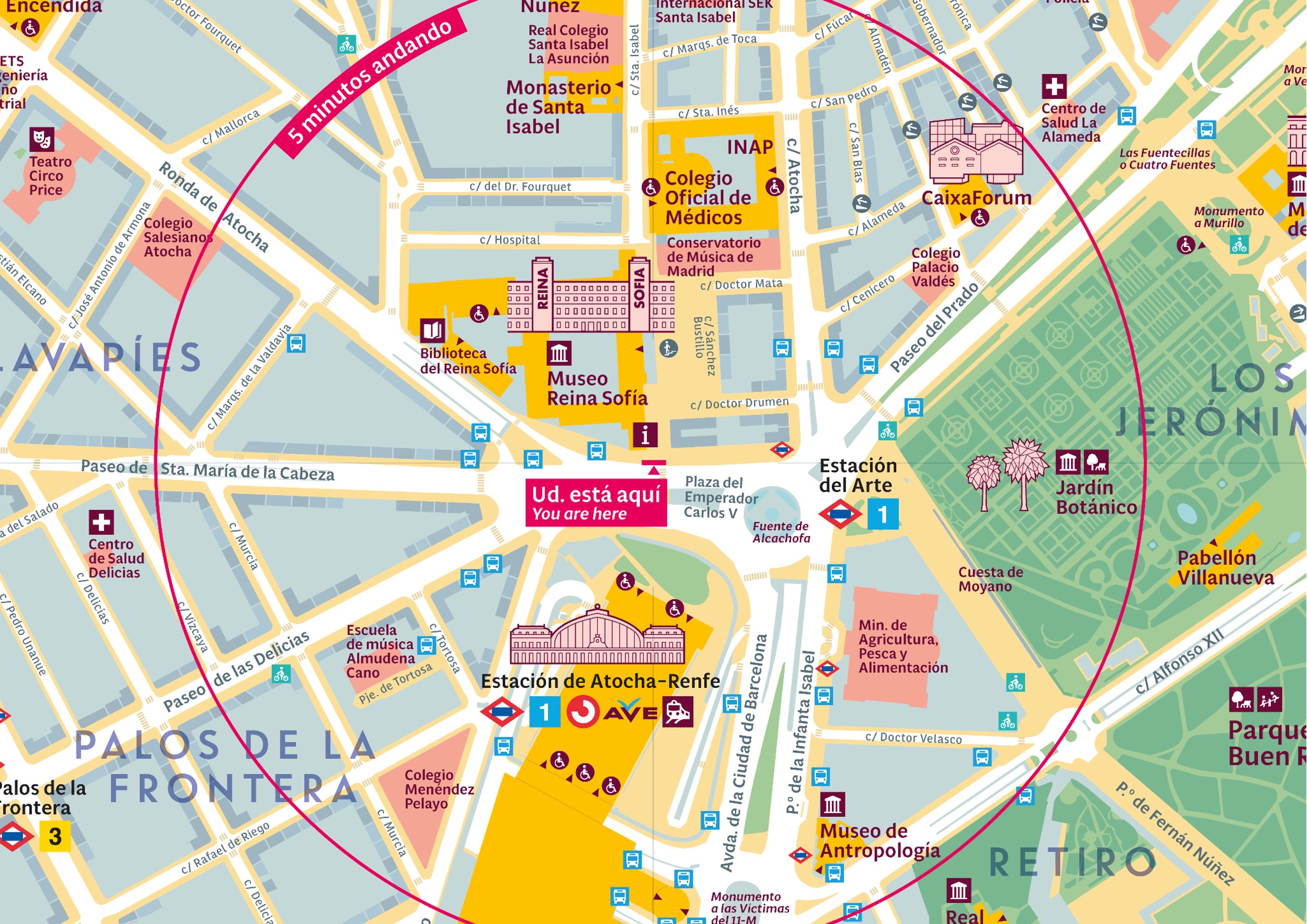
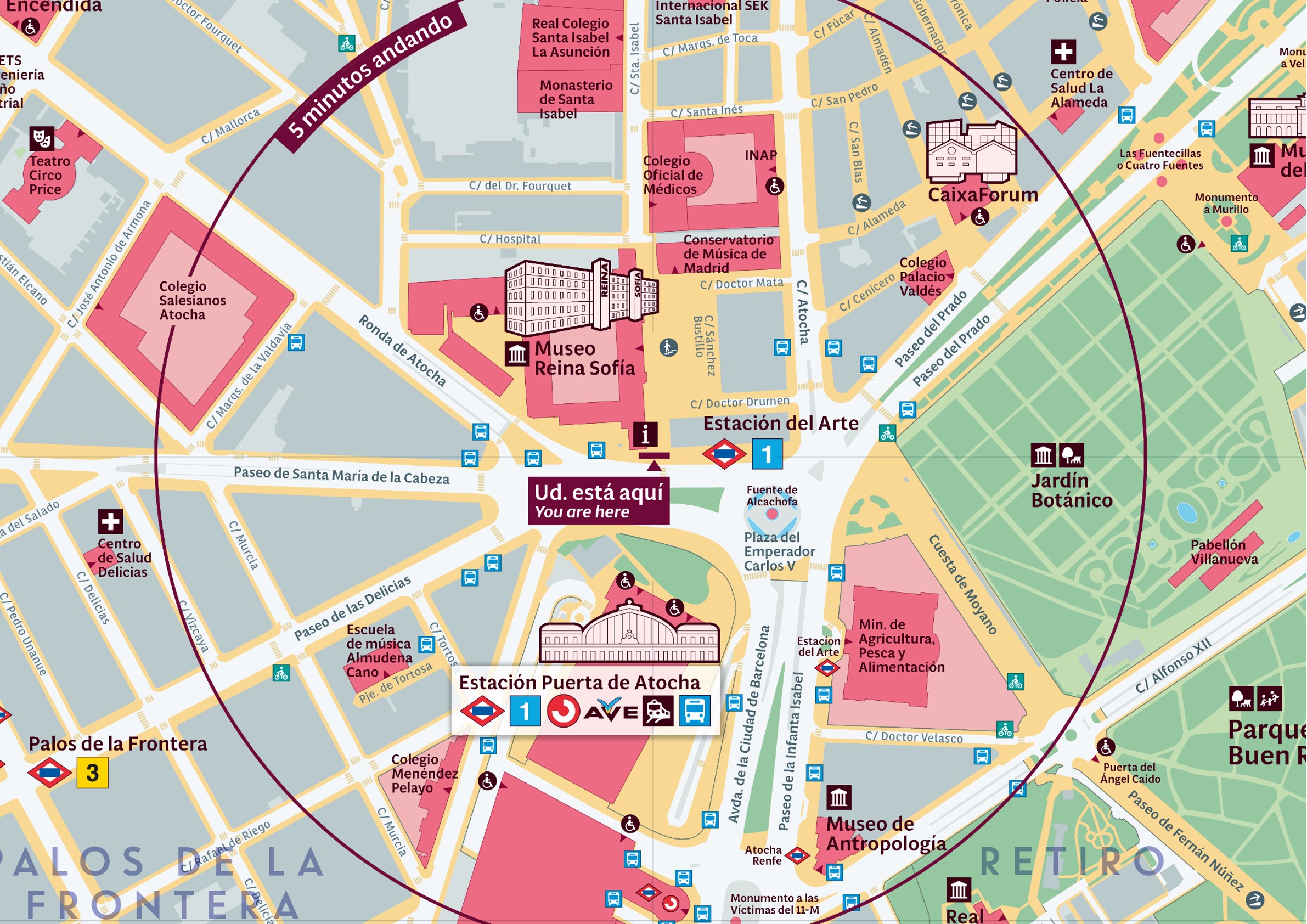
Universal Pictograms (evaluated by ISO) and illustrations of Urban Landmarks


Improvements in Key Legibility


Leer Madrid’s Positive Impact
The benefits to the city are numerous: improving understanding of the city and its landmarks, identifying neighbourhood names and boundaries; encouraging the use of public transport, all while promoting sustainability, general health and social cohesion. Leer Madrid now conveys a clear, accessible and official image of a people-centred city.